


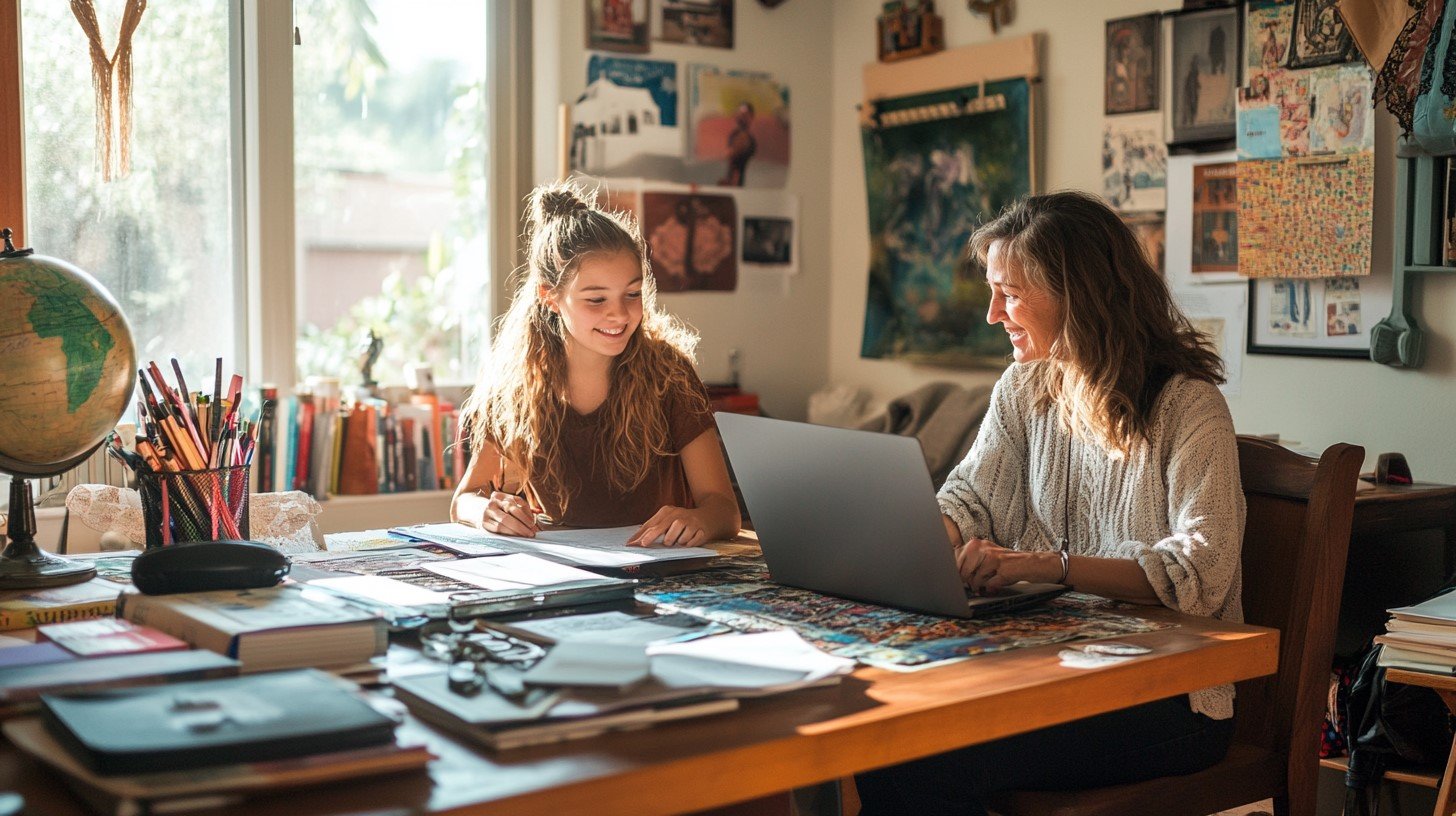
You live where you learn
You sit down at the kitchen table and the person opposite you is your teacher, a native speaker. You are the only student. There is no classroom and no row of desks: the lesson happens in that house, then the language stays around you when the hour is over. Someone sets the table, someone asks about your day, and tomorrow you begin again in the same rooms.
Before anything is confirmed, you see the family’s profile: who lives there, where they are, whether there are children or animals. You have time to read it. If the house is not the right one, I look for another family.
A week in the house starts on Sunday and ends on Saturday. You choose the hours before you come, from ten to thirty a week. You can live there, at their table, so the language is still in the rooms when the lesson is over — or come only for the lessons, still at the teacher’s home, without the room and without the meals.
If you want to be met at the airport, I can arrange a car; the transfer is extra, and cultural visits are extra too, when you ask for them.
In Corsica, French comes in with the maquis at the window. English has another weather, another house; the others do too, and they don’t sound the same.
If your child slept in that house
What matters to a parent is who they spend the day with. They sleep at their teacher’s home and are looked after day to day by the host family. You read that profile first: who lives there, who would be with them. If it isn’t the right house, I look for another. When it is, you can already see their place at the table.