
The key to comprehending the potency of immersion as a tool for language acquisition lies in examining the human brain’s process of language acquisition.
Laboratory-made language studies began centuries ago, but language acquisition was always achieved through immersion. Living with a native-speaking person turns language studying into something that involves every aspect of a person’s lifestyle,
from eating to speaking. Being immersed in a language makes that language cease to be a subject.
Why is language immersion considered effective for language acquisition?
The immersion method of learning a new language can be considered efficient because it involves learning according to the natural learning pattern of the brain.
Instead of learning the language from the perspective of academics, immersion involves learning the language from the perspective of communication.
This helps the brain create paths that are the same as those of natives.
Learners learn the language through context, review, and immersion practices that exceed the conventional grammar teaching approach.
Immersion allows the learner to benefit from continuous, instantaneous feedback. The host teacher can turn each encounter into a learning experience because the learner’s errors can be corrected in the environment’s natural way.
This active engagement quickens the pace of understanding and fluency to the point of thinking in the target language rather than translating from English.
Authenticity, necessity, and culture combined create immersion as the desired approach to effective learning of the language.

Why should parents consider language immersion for their children?
Parents might find the immersion option attractive because it provides many benefits to the child beyond learning another language.
Studies clearly indicate that immersion-school-going children develop their ability to solve problems, be mentally flexible, and work their minds to retain information in their memory.
They also learn the knack to do many things at a time.
Apart from the cognitive advantages, immersion also enables the child to achieve a widened worldview. Immersion allows the child to develop natural curiosity and learn to value diverse cultures.
This results in the child developing traits of empathy and understanding towards diverse cultures from a young age. A homestay immersion experience allows the child to be not only a student but also a member of a temporary family.
This deep understanding of culture and linguistics skills prepares the children for a global world and will provide them with benefits in their personal as well as professional lives.
Other elements that define immersion programs, as well as explanations behind the home-based structure for the learning journey, will be considered in other parts of this tex
t. At this point, however, the concern is in helping readers comprehend the deeper purpose of immersion, its nature as a traditional language method.
Read our complete guide to language immersion programs
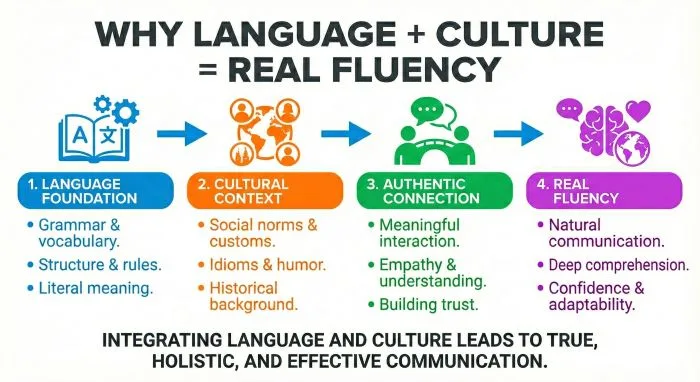
Why is cultural immersion often a part of language immersion programs?
Immersion in the culture of the target nations being studied in the language courses being offered is crucial because the culture of the nations and their languages cannot be separated.
Language involves not just the phrases and grammar rules of the particular nations being studied but also the culture’s history, beliefs, and particular worldview of the world around them.
Immersion in the culture answers the difference between being able to order a cup of coffee and understanding the culture of the café.
By immersing themselves in the lifestyle of the culture through mealtimes and community practices within the host family experience, the student absorbs the subtleties of culture that
will never be achieved through the classroom. Being immersed in the culture at this deep level allows the student to be a confident communicator. The study of a language becomes an experience of discovery.
Discover with us what is language immersion
Once the motivation for immersion becomes clearer, the decision of where or in what form immersion will take place becomes much easier. Talking, listening, living, and being observant every
day gives the student much more than mere memory work, as immersion brings language learning, regardless of the students being adults or children, right back down to its roots: human interaction, real life, and cultural knowledge.